
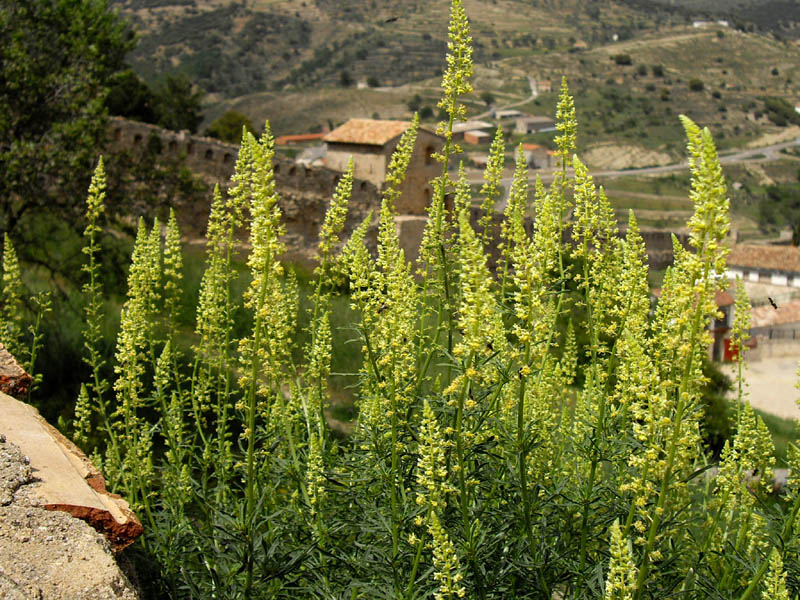
Weld (Reseda luteola), also known as Dyer’s Rocket, is a biennial that is native to Eurasia, including the Mediterranean area, North Africa and the Middle East. It was introduced to Europe during the Middle Ages and then to North America thanks to European colonization.
Weld is one of the most ancient dye plants. Evidence of its use dates back to 1,000 BCE, earlier than madder or woad. Weld is mentioned in the Bible. In fact, it still grows in Israel in modern times. The Romans used it to dye the robes of the Vestal Virgins. Its use spread to Persia after the fall of the Roman Empire. Weld was favored as a dye because it produces a bright yellow. At the beginning of the 20th century, synthetic dyes were introduced and the use of weld in commercial dyeing ended. It is still used today by artisans who prefer natural dyes.
The dye is contained in all parts of the plant, except the roots, but is concentrated in the leaves. The leaves can be used fresh or dried. Weld can be used on natural fibers such as wool, silk and cotton. The shade of yellow depends on the mordant used. An alum mordant produces a bright lemon yellow. A copper alum produces a greenish yellow. An iron mordant will yield an olive green. Combine weld with woad (blue) and you will get the famous Lincoln Green worn by Robin Hood and his men.
Weld is a biennial in USDA growing zones 5 – 9. It prefers full sun and well-drained soil. It has escaped our gardens and become a weed that can be found growing in disturbed areas. Interestingly, the plant produces better dye when it is grown in poor soil than when it is grown in the rich soils of our gardens.
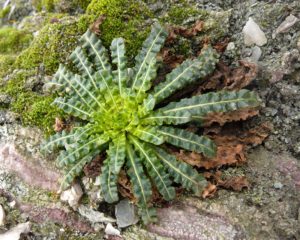
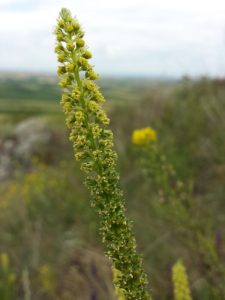
Like most biennials, the first year it produces a rosette of leaves that can be 12 inches across. The second year, it sends up a flower stalk that can be 3 to 5 feet tall. The flowers are a greenish yellow. Bloom time is late spring to early summer. The flowers give way to seeds which mature in August and September.
Weld is easily grown from seed. You can direct sow the seed in your garden after your last frost. Surface sow the seeds. Do not cover them. They need light to germinate. Germination should occur in 1 to 2 weeks. If you prefer to start your seeds indoors, plant them 6 to 8 weeks before your last frost. Surface sow them. Do not cover the seeds. They need light to germinate. Germination should occur in 1 to 2 weeks. You can transplant your seedlings outdoors into your garden after your last frost. Space them 12 to 18 inches apart.
2 Responses
I have been trying to grow weld for 4 years. Every year, I get the rosettes, no problem. But in the first year it blooms-not the rocket like second year, but the plant branches out with many small blooms that turn to what looks like a really super skinny long bean pod. Then it dies, period, no second year plant. No one anywhere mentions or shows this weird blooming I’m experiencing in the first year. I bought seed first from Richardson’s then from Grand Prismatic Seed. Same thing. What is going on???
My guess is that the “weld” seeds that you purchased are not the weld that is used for dyeing. There are many species of Reseda including annuals, biennials and perennials. When you order seeds, order by the latin name Reseda luteola rather than the common name of weld. If the company you are ordering from lists the seeds they sell as Reseda luteola, you need to contact them and let them know that the seeds they sold you are not that species, they are an annual species of Reseda.