
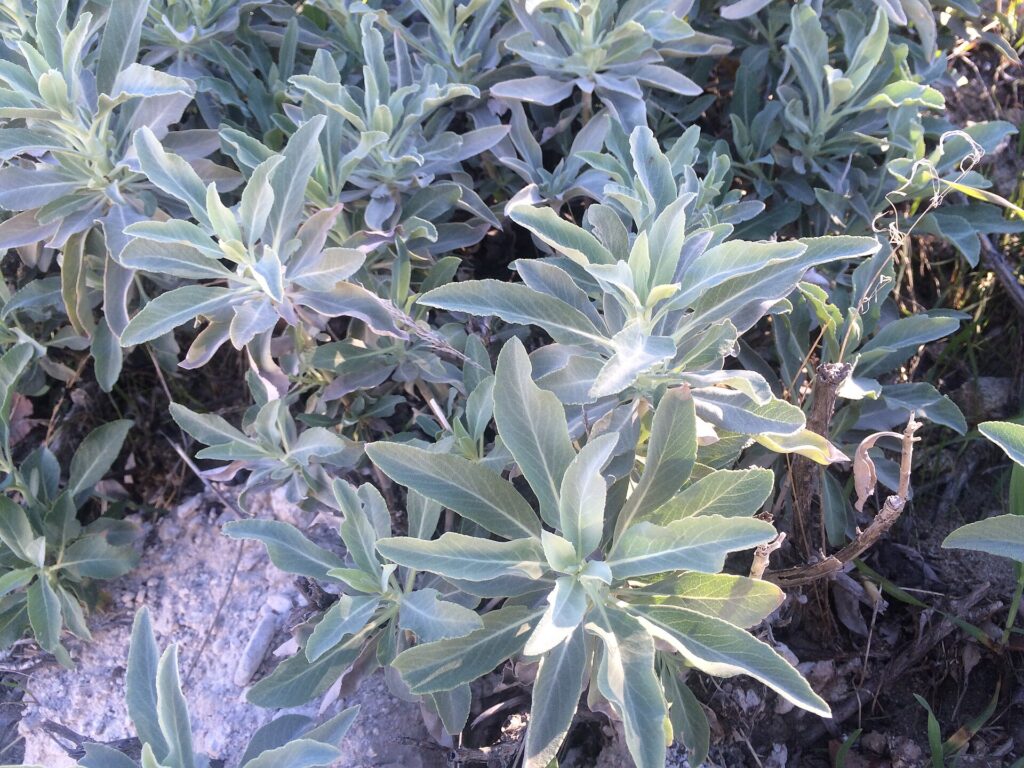
White sage (Salvia apiana) has a long history of both culinary and medicinal uses among the indigenous tribes of Southern California and Northern Mexico. The most common culinary use is in pinole which is a dish made from maize and flavored with the seeds of white sage. The Cahuilla people also mixed the seeds with flour to make biscuits and gruel. The Chumash people ate the leaves and stems.
White sage had many medicinal uses among native people. The seeds were used to remove foreign objects from the eye like clary sage seeds were used in Europe. Cahuilla women made a tea from the root that was drunk for healing and strength after childbirth.
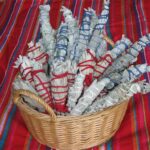
And then there is smudging, burning the dried leaves for purification. This has become so popular among non-indigenous people that white sage in the wild is becoming endangered thanks to over harvesting. Those big smudging bundles that you see all over are not necessary and an overuse of a limited resource. All that you really need are just two or three dried leaves. That is the traditional way to smudge.
White sage is a perennial woody shrub that is native to the deserts of Southern California and northern Mexico. It is supposed to be hardy in zones 6 – 9, but I have never successfully grown it through the winter here in zone 6 New Jersey. It grows best in sandy, well-drained soil and in full sun. Its dry habitat make it a good candidate for xeriscapes.
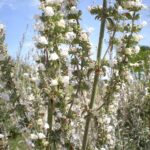
The plants grow 4 – 5 feet tall and 4 feet around. The leaves, which grow 1 – 3 inches long, are silver white in color and highly aromatic. They have fine hairs that make them soft to the touch. White sage is a fine addition to a moon garden. The flowers are the typical salvia flowers in either white or pale lavender. They attract pollinators such as bees which give the plant its name, apiana. The flowers grow on stalks that grow 3 – 4 feet tall. Bloom time is April to early June.
These are slow growing plants so you should wait until at least the second year of growth before harvesting any of the leaves. You can harvest individual leaves or cut a non-woody stem just above a node. Never harvest more than a third of the plant at one time to keep it healthy.
Propagation of white sage is a little tricky. You can propagate from soft wood cuttings which are cuttings taken in the spring or early summer while the branches are soft and pliable. A word of caution. Woody plants are notoriously difficult to root from cuttings so keep trying.
You can also grow white sage from seed. Just be prepared. The seeds have a very low germination rate, about 20%. This is an adaptation to their desert environment to ensure that not all seeds germinate at once in case there is a drought. Seeds stay viable in the soil waiting for better growing conditions. To get around this very low germination rate, you can scarify them by gently rubbing them with fine grit sandpaper. This thins the seedcoat allowing water to get in to the embryo stimulating it to germinate.
Surface sow the seeds. They need light to germinate. Gently press them into the soil to ensure good contact. Use a heat mat to keep the soil warm, between 75°F and 85°F. Mist your seeds regularly, keeping the soil moist, but not wet or soggy. Germination should occur in 7 to 21 days.
You can move your seedlings outdoors to your garden after the last frost. Space them 12 – 18 inches apart.