
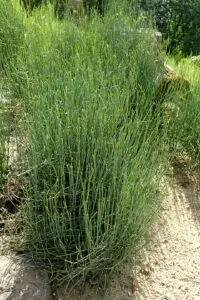
Ma huang (Ephedra sinica) is a perennial sub shrub that is native to Mongolia, northern China and Russia. It is hardy in zones 3 – 9. The Chinese consider ma huang one of the 50 fundamental herbs.
Ma huang contains ephedrine and pseudoephedrine. The highest concentrations are found in the stems which are dried and then brewed into teas, or made into decoctions or extracts. The dried stems are used to treat respiratory and cold-related conditions. It does this by relieving bronchial asthma, acute wheezing, bronchitis, coughs, and lung congestion. It can also induce perspiration, reduce fever, and clear nasal or sinus congestion by acting as a natural decongestant.
The roots are known as ma huang gen and are used differently. They are used to treat to stop excessive sweating, the opposite effect of the stems.
Ma huang grows in desert conditions on mountainsides and dry riverbeds. The shrubs are small, growing 1 to 2 feet tall and 2 to 3 feet wide, making them suitable to be grown in containers. It grows best in sandy, well-drained soils in dry conditions. If grown in a container, use soil intended for cactus or succulents. Do not overwater. Only water when the soil is dry. The plants require full sun. They will not grow in any shade.
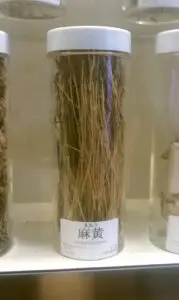
Harvest is in the fall when the stems have dried out. You can cut the plants back to about 8 inches tall. Dry the stems and cut them up for use.
Ma huang shrubs are dioecious, meaning there are male and female plants. Both male and female plants produce flowers, but you need both a male and a female plant if you want seeds. Bloom time is May through June. Once pollinated, the female plants produce orange-red fruits at the end of its branches. Each fruit contains two seeds. The seeds ripen from August through September.
You can grow ma huang from seed. For best results, use fresh seed harvested in the summer. The seeds will need to be cold stratified before planting. This mimics winter weather. Mix your seeds with moist sand in a bag and keep them in the refrigerator for about four weeks. After four weeks, soak the seeds in water in the refrigerator for an additional two days to soften the hard seed coat.
Plant the seeds 1 inch deep in a sandy mix. Keep the soil moist. Germination should occur in 10 to 30 days. After germination, cut down on watering, only watering when the soil is dry. You can plant your seedlings outdoors after your last frost, spacing them 1 to 3 feet apart. You can begin harvesting stems in 2 to 3 years.