
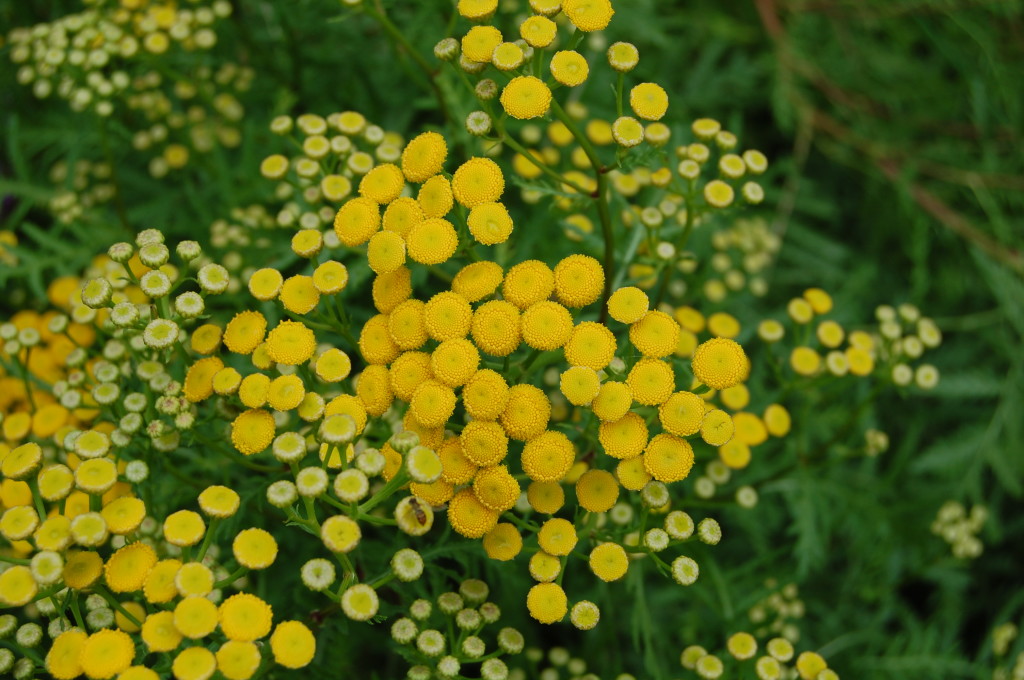
I love tansy (Tanacetum vulgare). I love its ferny foliage and its cheery yellow flowers. I love that it spreads all over my garden. You say “invasive”, I say “free plants!” I love that it is so tough that it will grow almost anywhere so I can use it to fill in those spots where nothing else will grow.
Tansy is native to temperate Eurasia (Europe and Asia). It has been grown and used throughout history. The ancient Greeks were the first to grow it for its medicinal properties. In the Middle Ages, it was used as a strewing herb thanks to its insect repellent properties. Later it was used in Lenten cakes to commemorate the bitter herbs eaten by the Israelites. The flavor is quite bitter.
Tansy has long been considered necessary in herb gardens because of its versatility. It was among the plants that colonists brought with them to the New World. It then escaped from their gardens and became naturalized in the landscape. Tansy has been used to treat worms, induce abortions, repel insects, and to prevent food spoilage. It was also used as a dye, producing a green color. It has even been used in burials to preserve bodies. Alas, modern research has not confirmed any real medicinal value for the plants.
In modern times it is used in companion planting. It is very effective in repelling the Colorado Potato beetle. The dried foliage is placed along baseboards keeps ants out of the home. In the fall, cut down the plant to the ground and toss it into your compost to add potassium. During the growing season, you make a compost tea from leaves to fertilize your houseplants. Tansy flowers can be dried and used in floral arrangements.
Tansy is considered a toxic plant. Do not handle the plants if you are pregnant because it can cause a miscarriage. Do not plant it where children or pets can reach it. If eaten, emergency medical treatment is required. If your pet has eaten it, take them to the vet immediately. It can also cause contact dermatitis resulting in a rash so you may want to wear gloves when handling it.

Tansy is a perennial plant hardy in US growing zones 4 through 8. It grows in clumps which expand in size each year. Mature plants reach three feet or more in height. My own plant grows to five feet in height. The leaves are dark green and look like ferns. The flowers bloom in clusters and look like yellow buttons. Bloomtime is July and August. Once established, the plants spread via underground runners as well by reseeding themselves in your garden. Keep them deadheaded to prevent them from reseeding all over your garden. Tansy prefers a sunny spot, but can tolerate some shade. It requires very little care and will grow in most garden soils. It is drought tolerant and disease resistant. The perfect weed!
Most gardeners purchase tansy as plants. But if you have a large clump that you would like to share, you should divide it in the spring.
Tansy is easily grown from seed. You can sow the seeds in your garden after your last frost. Surface sow only. Do not cover the seeds. They need sunlight to germinate. Germination should occur in 3 to 4 weeks once the soil temperature reaches 68⁰F.
Tansy has had a place in our gardens for centuries. No longer used medicinally, it is still important for its insect repellent qualities and use in dried floral arrangements. And some of us grow it simply for its beauty.