
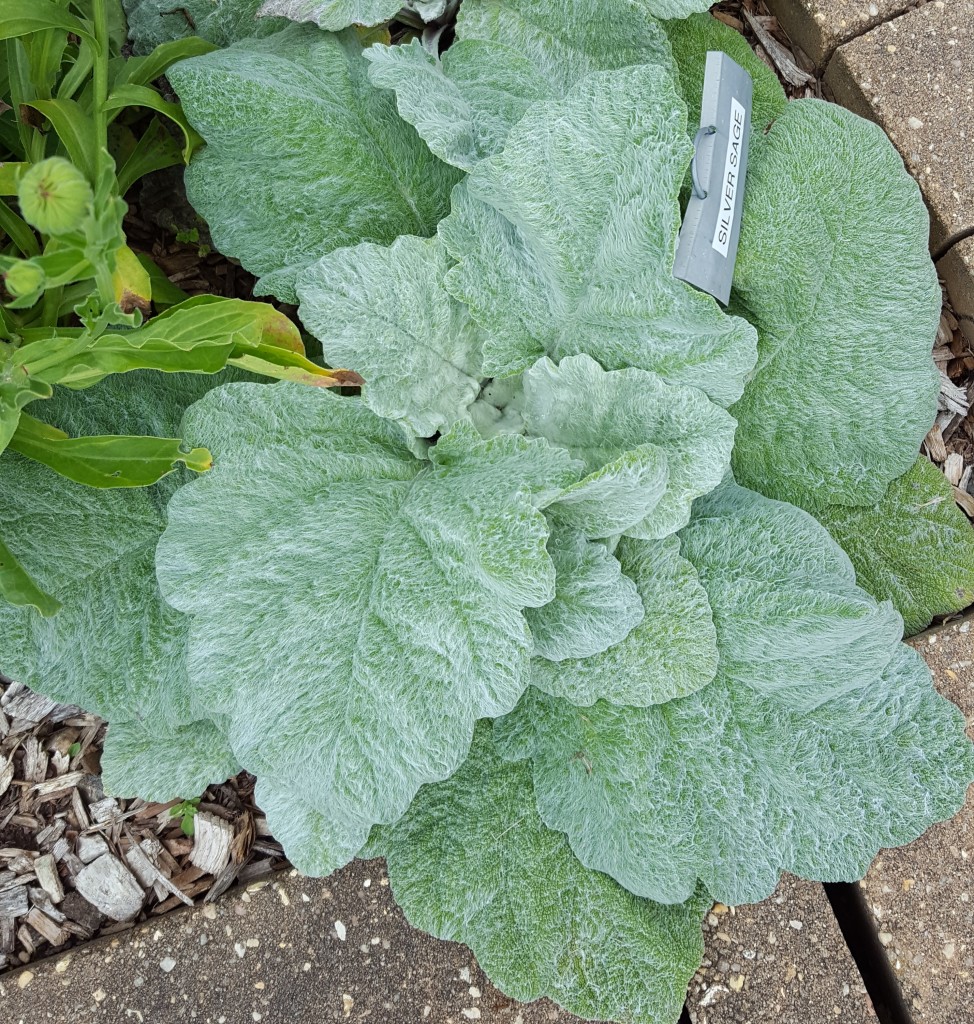
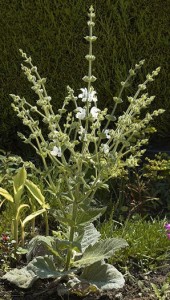
 Bloomtime is early to mid-summer, generally June and July. The flowers, either yellow or pink, grow in a tall spikes that look like candelabra above the plants. They can reach a height of 2 to 3 feet. Most gardeners remove the flower stalk before the flowers open because they are growing the plants for their foliage rather than their blossoms. If allowed to set seed, the plants die in the fall, followed by seedlings in the spring.
Silver sage is easily grown from seed. You can direct sow your seeds in your garden, mid- to late spring. Barely cover with 1/8-inch of soil. Expect germination in 21 to 30 days. Or you can start your seeds indoors 4 to 6 weeks before your last frost date. Barely cover with 1/8-inch of soil. Keep the flat evenly moist and germination should occur in 21 to 30 days, the same as if they were sown outdoors. You can move your seedlings outdoors to your garden after all danger of frost has passed.
Another way to propagate your silver sage is with what are called “off-shoots”. In the second year, you will notice little plants that have sprouted around the outside of the main rosette of leaves. Once they have developed their own independent root systems, you can gently remove them from the parent and plant them for next year.
It is recommended in the fall to leave the dead leaves on the plants rather than removing them. They protect the crown from excess moisture during the winter so that the plants will emerge in the spring strong and vigorous.