
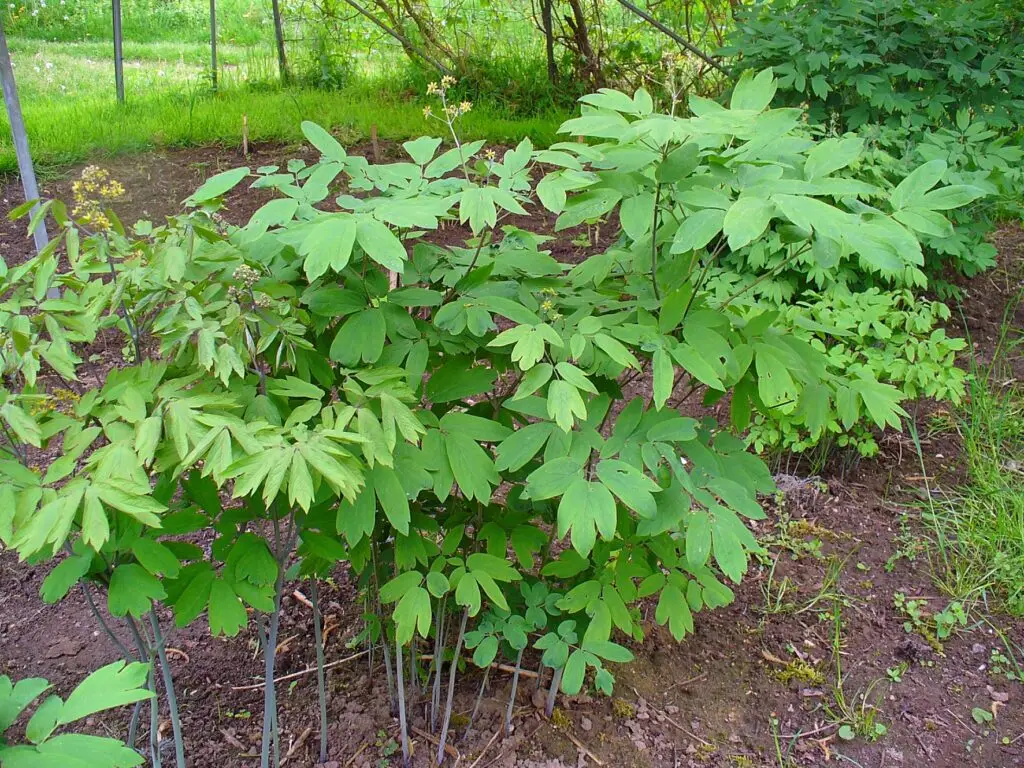
Blue cohosh (Caulophyllum thalictroides) is a woodland perennial plant that is native to the northeast US and southern Canada. It is hardy in zones 3 – 7. The root, also known as squaw root or papoose root, was used by the Native Americans as both an abortifacient and contraceptive.
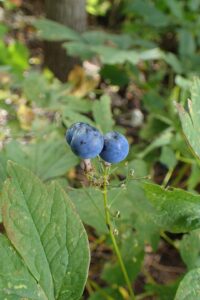
All parts of the plant are poisonous. The high doses needed to induce abortions cause nausea, diarrhea, dizziness, and respiratory failure. The attractive blue berries should never be eaten. They are highly poisonous. They are not poisonous for birds who eat them and spread the seeds.
Blue cohosh can be found under oaks and maples. It grows best in shade or dappled shade. It prefers slightly acidic, loamy soil containing organic matter from decaying leaves and other plant materials. The soil should be consistently moist and not dry out.
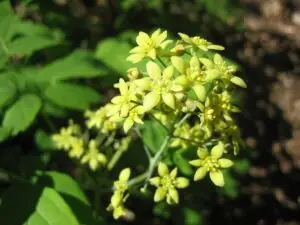
The plants grow 1 – 3 feet tall. They are multi-stemmed with compound leaves that are purplish in the spring. The flowers open in the early spring, April through May, before the leaves are fully open. They are greenish yellow and grow in panicles. They are pollinated by bees. Once pollinated, they develop berries which turn blue when they are ripe. In addition to birds, mice also eat the berries.
Propagation is by division or seed. If you want to divide a clump of blue cohosh, do it after the plants have finished flowering in the spring. Carefully dig up the clump and brush the soil off of it. You can then cut up the roots into pieces, making sure that each piece has at least one “eye” or bud from which the plants grow and some roots.
Plant your divisions right away. Do not allow them to dry out. Plant them at the same depth they were growing, usually 1 – 2 inches deep and spaced 18 to 24 inches apart. Mulch them thoroughly and water regularly until the plants become established.
Growing blue cohosh from seed is a little trickier. You have to use fresh seed that is harvested in the fall directly from the berries. Plant the seeds immediately. Do not allow them to dry out. Direct sowing them in the fall ½-inch deep into your woodland or shady garden is best. They need a period of cold before germination. Even then, it may be 1 – 3 years before the seeds germinate.
You can start your seeds indoors instead. Wrap them in sphagnum moss and place them in a plastic bag in your refrigerator during the winter months. In the spring, you can sow the seeds ½-inch deep in a container and keep the soil moist until germination which could take 1 – 3 years.
Once your seedlings have developed a strong rhizome, you can plant them out into your woodland or shady garden, 18 – 24 inches apart.