Explore, grow, and garden with me

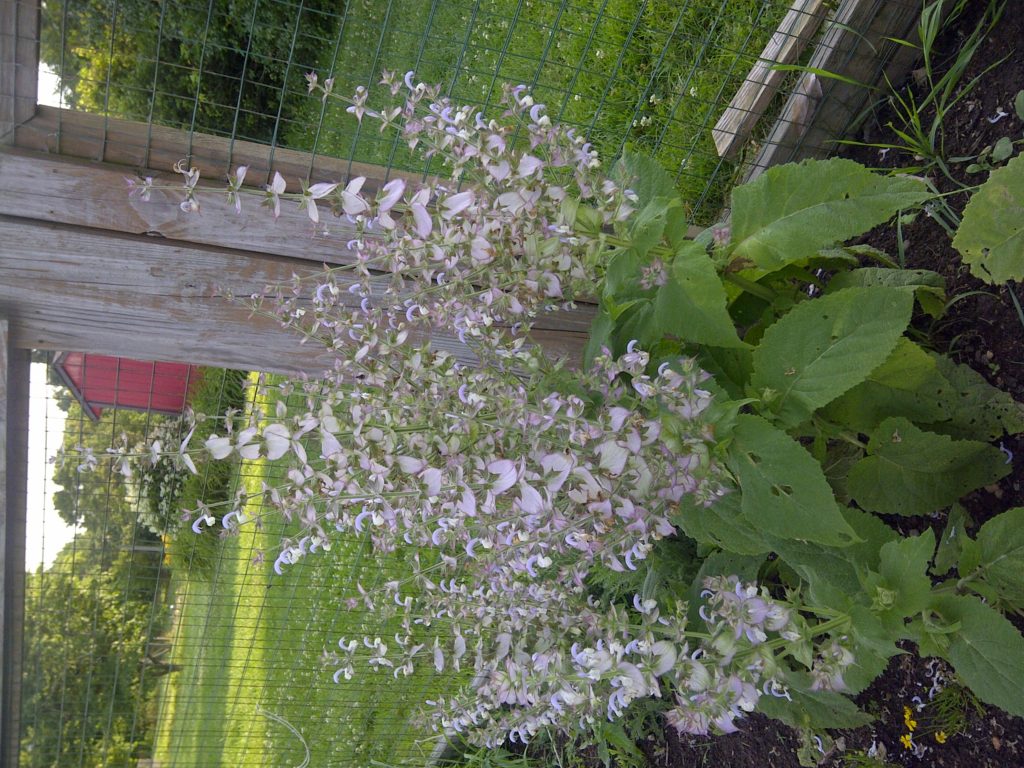
Clary Sage
I’ll never forget the first time I saw clary sage (Salvia sclarea) in bloom. I literally stopped in my tracks. I’m a big fan of salvia and these were the largest salvia flowers that I had ever seen. It was difficult to believe that this was an herb and not an ornamental plant. Herb plants don’t normally have such showy flowers.
Clary sage is also known as Eye Bright or Clear Eye. This stems from its ancient use in helping to remove foreign bodies from the eyes. The seeds have a mucilaginous coat which is sticky. When you had something in your eye, you would place a clary sage seed in your eye. The idea was that the seed would stick to whatever was in your eye making it easier to remove. I DO NOT recommend trying this.
Other medicinal uses for clary sage in the past included treatments for digestive issues, sore muscles, menstrual issues, insomnia, kidney disease and anxiety.
Nowadays the essential oil of clary sage is used to flavor vermouths, wines and liqueurs. It is also used in aromatherapy. Personally, I don’t find the scent of clary sage to be pleasant. It has kind of a musty smell.
Clary sage is deer resistant. The leaves are hairy and heavily scented, both of which deer dislike. Like a lot of herbs, its flowers also attract beneficial insects, including butterflies.
Clary sage is a biennial or short lived perennial native to the Mediterranean area, North Africa and Central Asia. It is hardy in zones 5 through 9. Grow it in full sun and well-drained soil. The plants are drought tolerant but grow best when watered regularly. The first year the plants grow a basal rosette of leaves that can be 2 to 3 feet wide. The second year, they send up a flower stalk that is 2 to 4 feet tall. The flowers are lavender and white. Bloom time is early summer. If you remove the flower stalk before it goes to seed, you may be able to coax another year or two out of the plants. Most gardeners allow the flowers to go to seed because it readily self-sows in the garden, assuring you of flowers for many years to come.
If you are not lucky enough to have clary sage in your garden already, it is easy to start it from seed to add to your garden. You can direct sow your seeds in your garden in the fall in warmer areas or in the early spring in colder areas. Sow the seeds ¼ inch deep and 1 to 2 inches apart. Germination should occur in 10 to 14 days unless you are sowing your seeds in the fall, in which case they will not germinate until the following spring when the soil has warmed to 70⁰F to 75⁰F. Thin the seedlings to 12 inches apart.
You can also start your seeds indoors 6 to 8 weeks before your last frost. Sow them in soil that is 70⁰F to 75⁰F. You may have to use a heat mat. They need the warmth to germinate because outdoors, the seeds are produced during the summer when both the soil and the air are warm. Sow the seeds ¼ inch deep. Germination should occur in 10 to 14 days. You can transplant your seedlings into your garden after your last frost. Space them 12 inches apart to give them room to grow.
Remember – you won’t see any of those spectacular flowers until the following year. Clary sage blooms during its second year of growth. I recommend seeding clary sage two years in a row to ensure you have flowers every year.
© 2013 Caren White